
Tabula Rasa by Arvo Pärt (1984)
Simon Tyler

Indexicality In Art
Indexicality in art. The idea of the moment, the moment being captured, and subsequently recalled with a visceral connection to that moment. Indexicality speaks to context which informs our relationship to the art. In fine art it could be our associations to the actual pigment of the paint or the definition of the brush strokes on the canvas. When you look at a painting such as Ronda Bridge by David Bomberg or Mornington Crescent by Frank Auerbach you can almost feel the moment the paint was introduced to the canvas.
In analogue photography, it’s the image’s relationship with the moment the light comes through the shutter and reacts to the chemicals on the film. That moment links the photo to a precise time and an explicit place, and possibly, just possibly, an emotional context.
In music, the earliest recording technology was noise being sent through a tube with a needle on the end, the vibrations of which would be embedded into tinfoil cylinders and then when the cylinders were re-turned the actual sound would be heard again.
The emotional thrill of hearing Thomas Edison recite ‘Mary Had A Little Lamb’ is still palpable. (Side bar: it was some French bloke who got there a few years earlier than Edison… but you know, Americans and their ferocious capitalism, defining a story. However, it should be said, neither of the recordings sound like they would be considered for a place on Pretzel Logic… so, what do ya know!). Indexicality is also present for many, in the need to share ‘I was there at that concert’ or ‘I remember where I brought this one’ or even the bane of every record shop owner… ‘I’ve got that record at home!’
Now, on a personal level (and really, what other level counts?) for me, indexicality is about the context when I encounter the art and the memories I then construct and reconstruct around that moment.
A few years ago, I developed a love of Sacred Music, and the moment I remember, the intersection of hearing and listening, engaging and loving, happened on the A3 just outside of Guildford, no doubt on route to Hampshire from Surrey, a journey I made way too many times.
I had Radio Three on and William Byrd’s ‘Mass for Four Voices’ was played. Dorking to Andover isn’t quite Jerusalem to Damascus but just like St Paul I saw the light. The incandescent beauty of the piece seared through my mind, which up until that point was focused on the minutiae of my awful job, and the Toad work that lay ahead of me. Instead, I was granted a peak at the “glorification of god and the permissible delights of the soul”; as a Jewish atheist that is not a box I feel I get to look into all that often. The beauty was cleansing and reaffirming. The magic trick with Sacred Music is you don’t have to believe in God, you can have a transitional or transactional relationship with faith, you can have no meaningful connection to divinity in your life. It doesn’t matter. Sacred Music is God buying the first round and then going home. The music is just magnificent on its own terms.
I pulled the car into a lay by and wrote on a scrap of paper “W. BIRD Mas 4 VOX” and I was In! The magical world of this highest form of music was made available to me. (Once I had brought some CDs a few days later – this was in a world before streaming.)
Manfred Eicher, the aural obsessive founder of ECM Records had a similar experience first coming across Arvo Pärt. Byrd is Pärt’s progenitor, Arvo Pärt is William Byrd’s living successor. Eicher came across Pärt the same way I came across Byrd; his was admittedly more romantic sounding, a late night drive across the autobahn, through the fog, and not a dull home counties commute to work. However, the impact, I can imagine, was the same. The wonderful jolt to the system of “What the fuck is that?”.
Fast forward a few years and the label owner is recording and releasing Pärt’s first works on ECM. Pärt would go on to be one of the three behemoths of the record label alongside Jan Garbarek and Keith Jarrett. But our entre is Tabula Rasa. ECM New Series 1275.
This was released in the September of 1984, on Vinyl, Tape and CD. I have it on CD and CD I would argue is the format that best supports the ECM ideology, if that is not too strong and pompous a word.
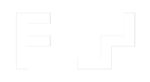
The faded white sleeve with an almost translucent flat grey inner square, placed portrait in the centre, with the tracks and the artists listed on the front. The font is the faded white of the outer square. It’s a strain for the eyes to read. The only colour on the sleeve is the album title Tabula Rasa presented in a washed-out sky blue, sat under the name of the composer, who gets top billing, ARVO PÄRT.
Once your eyes adjust to the typeface and modernist, faux minimalist design you can see four tracks and a collection of different performers listed.
The four titles (three titles, one repeated, though with different performers) are in Latin. ‘Fratres’, ‘Cantus’, ‘Fratres’, ‘Tabula Rasa’. Rough translation – Brothers / Singing / Brothers / Blank Slate.
The booklet inside the CD case is printed on good quality paper. You can smell that when you first open it… mmmmmm lovely!
Here is an admission. I’ve never read it! I’ve had the CD for many, many years and never read the essay which is included. The essay is first written in German and then an English translation. My relationship with the music, with Pärt’s music, is similar to my relationship with the paintings of Mark Rothko. I don’t want biography. I don’t want exposition. I don’t want background. I just want the music.
So, I didn’t, I still haven’t, read the sleeve notes. Strangely, Pärt and Rothko are unique amongst the art that I love. Usually I devour the biographies, I search for the “deep dives” and crave a peak behind the curtains. Not here. Here, I make assumptions about meaning based purely upon my emotional reaction to the music. So, forgive me if I go too far!
Put the CD in the machine and press play. The sound builds. From silence, Gidon Kremer’s solo violin is incessantly playing an arpeggio chord sequence. The playing feels frantic, frenetic, desperate, like a fly trapped in a glass. As this intense sequence reaches a climax, a brief pause is punctuated by Keith Jarrett’s piano, holding a single chord. A deeply resonant chord. This chord is important. It’s our anchor for the next 10 minutes, this chord works as an introduction and reintroduction to 7 sections of dialogue, or more prosaically dance, between the two instruments.
The piano initially soothing the frenzied violin, eliciting long mournful high, yearning almost painful, notes from the strings, somewhat reminiscent of Olivier Messiaen’s ‘Quatuor pour la fin du temps’. The subsequent sections fluctuate between intense energy and the exhausted rest.
The effect of this repeated and strained dialectic is disturbing. Tension and release, ebb and flow. This is ‘Fratres’, the brothers. Sibling rivalry, Sibling solidarity.
Next up ‘Cantus’, a solemn bell rung, in isolation, three rings, before joined by cascading strings leading us to our inevitable fate. The sadness and the mournfulness of the music is a celebration, this is an elegiac remembrance for the English composer Benjamin Britten. This piece is a warm shower of sadness, which has been used, almost endlessly on film and TV; you will have had heard it before! The strings intertwine and overlap as the bell marks time, maybe the end of time. The piece ends with the resonance of the bell rung and sound hanging and fading into the ether. It is stunning.
A slight return for the third track, another version of ‘Fratres’. Though it’s unrecognisable from the first. This time the duelling duo is replaced with 12 cellists. Yes, that’s right, 12 of them, 12 cellists that spring liberated from the Berlin Philharmonic and bring the most unnerving smorgasbord of calm and tension (I know, cognitive dissonance or what?), they replace the frenetic dialectic element that we heard before with a foreboding sense of certainty, one could almost say faith!
The music builds over 11 minutes, a repeated motif of chords and harmonies. The intricacy of the arrangement is exquisite and deserves to be listened to actively. Not in the background whilst you disengage or meditate on your life. This should be heard, akin to reading a book or listening to a radio play. I might argue it is resonant with listening to a radio play by Samuel Beckett.
And now a pivot. We get to the main course. ‘Tabula Rasa’. A piece divided in two halves. Seemingly assembled from the three tracks we’ve heard earlier. As if we have seen the sketches and now are presented with the finished work of art. The music is similar in tone and delivery to ‘Fratres’ and ‘Cantus’. The first section, Ludus, meaning school or play. Longing single mournful notes, the sorrowful tolling of a bell, the building and falling, crescendo and decrescendo, silence as a character, sound as an urging. The second movement, the Silentium, initially reminds me of an album that was massive for me growing up and was most likely my gateway drug to more thoughtful music, ambient music: Virginia Astley’s wonderful and remarkable From Gardens Where We Feel Secure. The beginning of the second movement of ‘Tabula Rasa’ has the sound of the rusty gate and the swing in the children’s park, soothingly undulating back and forward in the breeze.
Ever-decreasing anxiety-filled spirals of sound. The sound of anxiety fades, decays, gently as though being wrapped in gossamer. Resonant chords. Straining strings, somnambulant percussion and the space between the notes, between these sounds, is charged with a deep expressive energy.
It’s all here, but it feels more intense, more visceral. Rather than use the studio, a controlled environment, Manfred Eicher, the head of ECM, the record producer, takes us out of the confines of players and the composer and into the world of the audience.
These two movements were recorded live in Berlin. Why a live recording? This isn’t Jarrett in Koln, the capturing of a moment, a one-off improvised concert, this is a composed and orchestrated work. It would be possible to record a studio version of the piece. Of course it would. But this recording has that Indexicality that we talked about earlier. That capturing of a precise moment in time, light in a bottle, a snowflake of emotion and a feeling held gently, desperately in our palm.
As the music decays underneath us, all around us, notes and strings straining for their vibrations to break the sound barrier at the low end of the spectrum, we hear the distinct, unrestful, fidgety sound of an audience. An audience which is not listening in comfort. Not listening in a state of ease and contemplation but rather shuffling uneasily, coughing restlessly.
Arvo Pärt’s music needs humanity, demands it. It needs a listening ear, a dirty, grubby listening ear. It needs to be rooted in the visceral and primeval senses. Too often, way way too often, it feels it is parked as background, reflective music in one of those god-awful Apple Music by mood playlists for working or concentration or whatever the fuck they not so subtly suggest, or the hideous BBC Radio Three Unwind segment.
Now, I don’t want to shout at you like some nutter on the bus or crazed cultural fascist but Arvo Pärt’s music, his art, like Beckett, like Rothko, should be engaged with and absorbed actively. It isn’t easy, it’s a hard listen and it is better for it. The deeper you are willing to go, the deeper Pärt will take you, and in an age of increasingly easy bite-sized segments, prepared and wrapped up telling you what to think, what to feel, Arvo Pärt, and Tabula Rasa, is a Blank Slate.
Simon is a life-long music obsessive, and erstwhile record shop owner. He fought (and lost) in the punk wars and still flies a tattered flag for revolution, slightly askew passion and performative disagreement. He loves pop music and Avant-garde music in equal measure and will not give house room to the concept of a guilty pleasure. He supports Chelsea, loves the films of Jacques Tati and the plays of Howard Barker. He enjoys a good cheeseburger with relish.